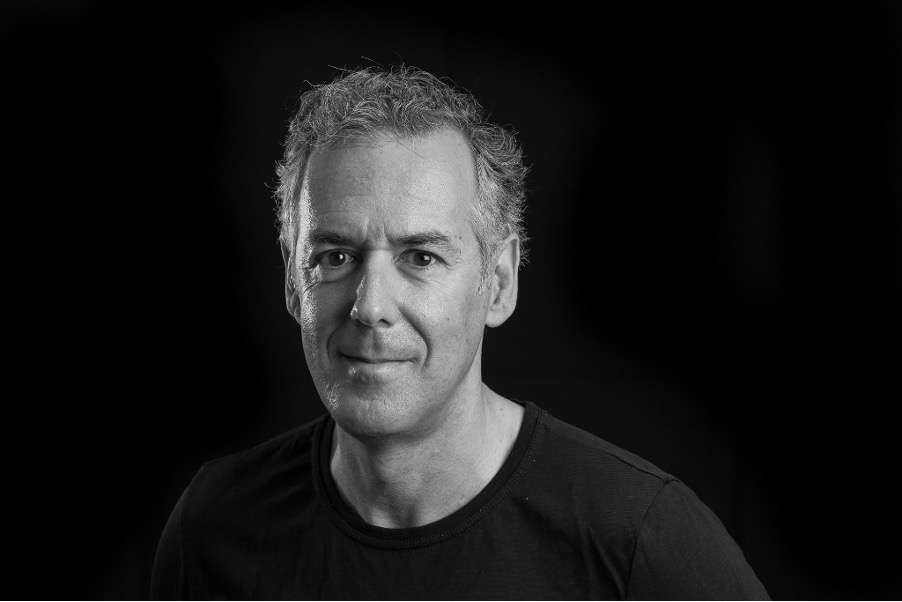
In Memory of César Rodriguez Ranero 1963-2026
César Rodriguez Ranero died on 5 June 2026 after a sudden, severe illness. His work on subduction and rifted margins has had a major influence on our use of marine seismic methods to better understand these plate boundaries. Ranero was born in 1963 in the Basque Country of Spain. During his doctorate in Barcelona at CSIC, the Spanish National Research Council, he joined the Lamont-Doherty Geological Observatory in New York where he focused in processing and interpreting multichannel seismic data. His Ph.D. was followed by a move to the newly formed GEOMAR research Institute in Kiel, Germany, where he worked with Roland von Huene’s new group to study the structure and dynamics of convergent margins. His work at Kiel led to a better understanding of erosive subduction margins, including the processes of subduction erosion and better imaging of the impacts of seamount subduction on forearc deformation. In later work, he turned his attention to the deformation of the incoming plate, and the realization that bend-faulting in the subducting plate was linked to widespread lithospheric serpentinization near the trench axis. In 2005 he returned to Barcelona as ICREA Professor to create the Center for Subsurface Imaging at the beachfront Institute for Marine Sciences which is part of CSIC. In the past two decades CSI has become one of the leading research centers for marine seismic processing in Europe, with Ranero linked to many of its discoveries, in particular the better understanding of continental rifting and its transition to seafloor spreading, and exploring the role of rock stiffness in seismic deformation around a subduction megathrust.
Ranero was a Fellow of the American Geophysical Union - AGU – and he served as President of the Tectonics and Structural Geology Division of the European Geosciences Union – EGU. He authored and co-authored more than 150 papers, with more than 50 invited talks, keynotes and seminars at Universities, research centers and congresses. He was also generous with early career researchers, and supervised numerous Ph.D. students and Postdocs, while helping them gain the recognition they deserved.
César was an active member of the IODP community. He was one of the leading proponents of the Costa Rica Seismogenesis Project, CRISP, which led to IODP Exp. 334 and 344 and to a riser drilling proposal – CRISP 2 – that is approved for implementation pending availability of the drilling vessel. He also coordinated the MEDOC survey in the Tyrrhenian Sea that led to IODP Exp. 402, where he played a key role in conceptualizing the rift exhumation process.
César was also a friend to many of us geoscientists. His strong views were always invaluable starting points for stimulating discussions.
In one of the twists of a researcher’s life, while working at CSI he got to know his wife Rieka Harders – whose family lived close to GEOMAR – on a research cruise in the South Pacific, and their three children grew up in both Barcelona and Eckernfoerde, close to Kiel.
We will miss you a lot!
Paola Vannucchi and Jason Morgan